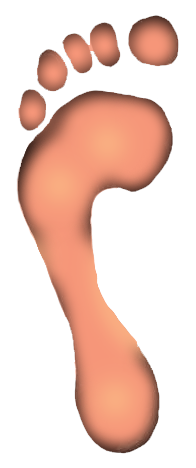
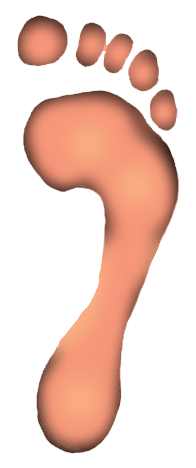
| Look at the structure of any device using an arch. It is the shape that gives it strength. Your foot is a complex structure using 26 bones. In the great design that became the upright walking human being, the balance provided by the foot is essential. Face it, the ground is not always perfectly flat. So all those moving parts are there, each with controlling muscles to allow you to make those constant, minute adjustments to achieve the proper balance to stand under whatever conditions you are in.
Long before modern society, what did man do? He walked barefoot as he hunted for his prey to eat and ran from the predators that wished to eat him. All those bones in his foot were getting constant use, today we call that exercise. What do you do with your feet today? You stuff them into your shoes, you walk to your chair and you sit. Yes it is nice that your shoes protect you from the outside world, but they also protect your feet from building up their natural defenses. Does a boxer learn to take a punch by hiding behind a bunch of padding? Muscles get stronger when they are challenged to work.
Muscle movement is short term. Lift your arm up. For most people, that’s no problem. Now hold it there. Tick tick tick, now that’s a problem. It hurts. Your muscles don’t want to keep working constantly. They need to relax.
Are you really exercising your feet? Probably not. The great runners of the world come from places like Kenya and Ethiopia, where barefoot children run six miles a day to get to school, or to get water for their family. They become super human athletes the old fashioned way, by daily training. When you spend hours standing, you are training your feet too, but they aren’t getting trained to work, they are settling into a comfortable position to support your standing weight with the muscles doing the minimum amount of work. Over time, your feet, specifically the ligaments in the arches in your foot are stretching as the foot is flattening. The bones that made up the arch of your foot are resting on whatever is below them, the flat bottom of your shoe.
So the only way to put your arches back in place is to change that bottom; an arch support that has the correct shape of the arches. After decades of research by podiatrists and bio mechanists, led by people like Georg Alzner and later Joe Polifroni that shape has been discovered and refined. We now know the common shape the arches of a human foot should have.
Alzner discovered, when you put the bones of the foot into the correct position, there is a chain reaction that puts the ankle, lower and upper leg, knee, hip, back neck and head all into the ideal balancing position with the weight being supported by bones rather than the work of the muscles. Many of the stresses of the body, where muscles were working to hold up the body, were reduced by transferring the work to the bone structure.
Alzner’s first arch support was a solid base, reforming the four arches of the foot in a standing position. It was to become the standard of the industry for almost 50 years. Starting in 1991, Polifroni started promoting the Alzner to a mass market, opening up 265 Good Feet Stores in markets all across North America and selling millions. With that success came knock offs, including the Chinese manufactured Phase 4 and Polifroni’s first improvements to the design. At 11mm or more in thickness, these devices didn’t fit into most normal shoes. Good Feet Stores added a line of extra depth shoes, but those styles limited the market.
By 2003, Polifroni had a new design, marketed as the Flex. At a thickness of 5 mm, it cut more than half the thickness of the Alzner and its knock offs, fitting into far more shoes. But the Flex name was a bit of a misnomer. The product really had the stiffness of the hard plaster, custom arch supports made by podiatrists. It was just as hard as the solid arch supports, with less of a transitional taper.
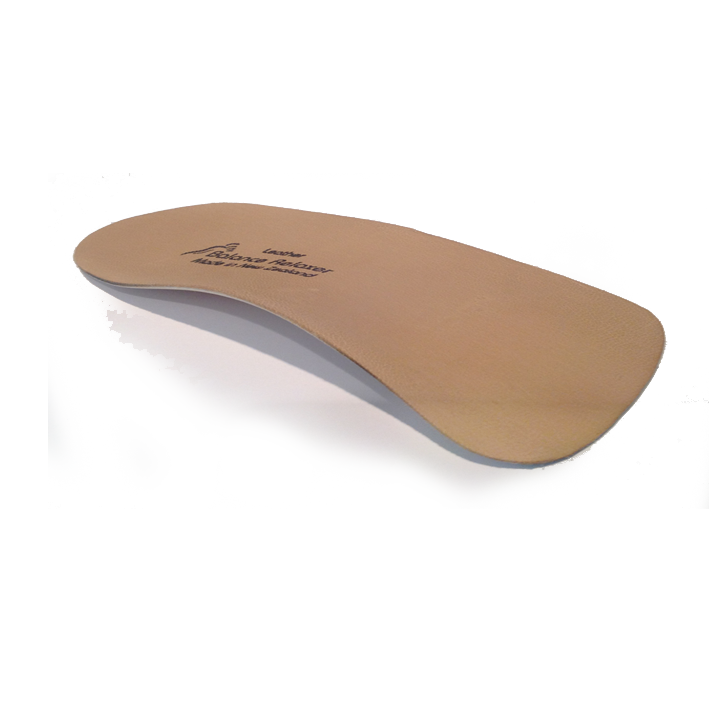
It took Polifroni another six years of research and development, and a new manufacturing company, Foot Supports Internatinal, to yield the Balance design. The Balance arch supports now have all the benefits of the solid Alzner, fit into a thickness of under 2 mm. So its so thin, it fits into any shoe. And it tapers perfectly.
What makes it remarkable is its flexibility only made possible by the special formulation of materials. While it is still supporting your arches to that perfect position, the Balance supports will bend and move with your foot. This makes the Balance supports ideal for sports situations where solid footing during movement is a constant necessity.
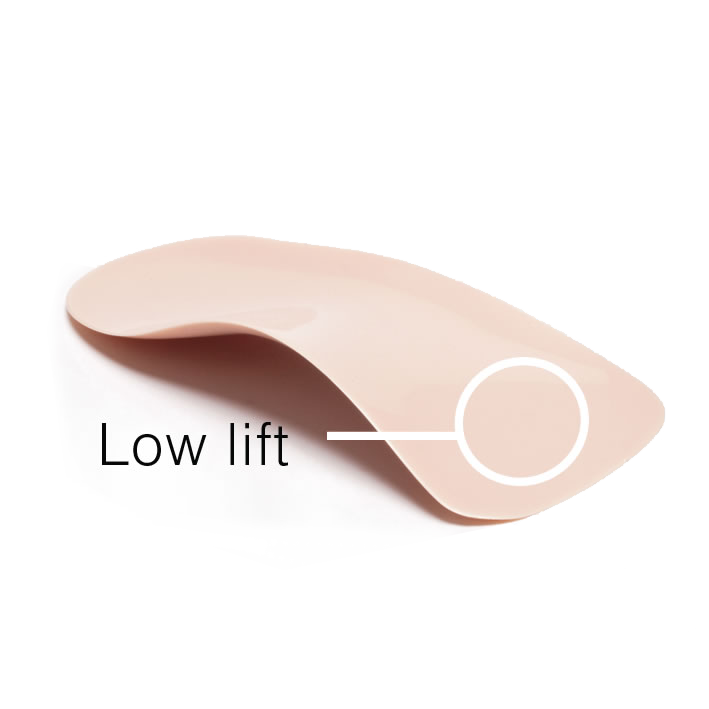
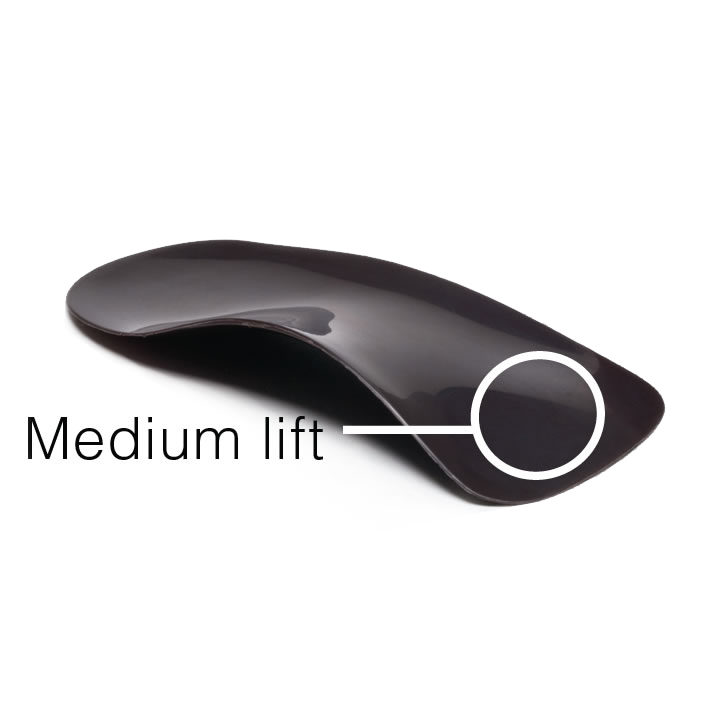
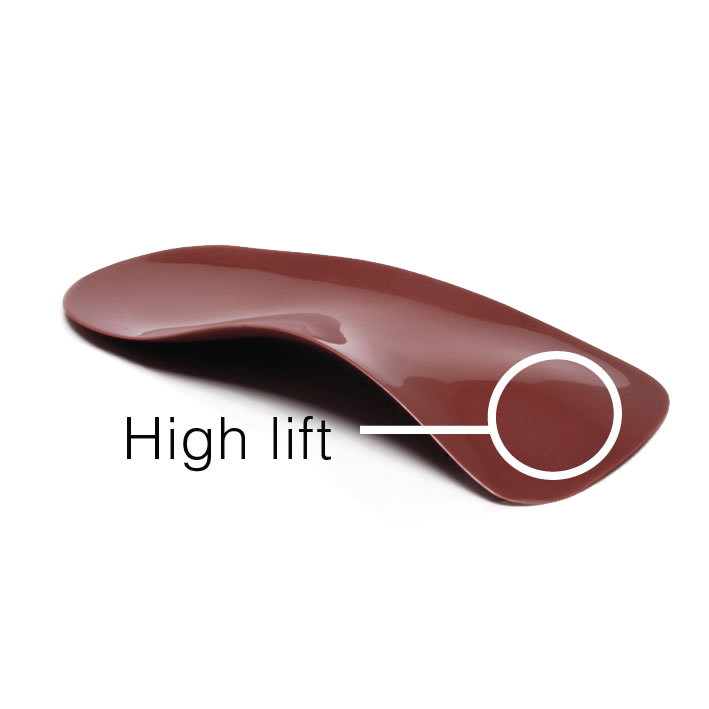
The Balance arch supports come in three models, with an increasing degree of metatarsal support. The metatarsal arch in the forefoot controls the separation of the toes. A stronger intensity is recommended depending on the amount of activity the foot will be making. |